PDF Style Guide or Digital Brand Guide?
PDF or website for your brand guide? Both formats have their place. This comparison shows which one fits your situation and when the switch actually pays off.
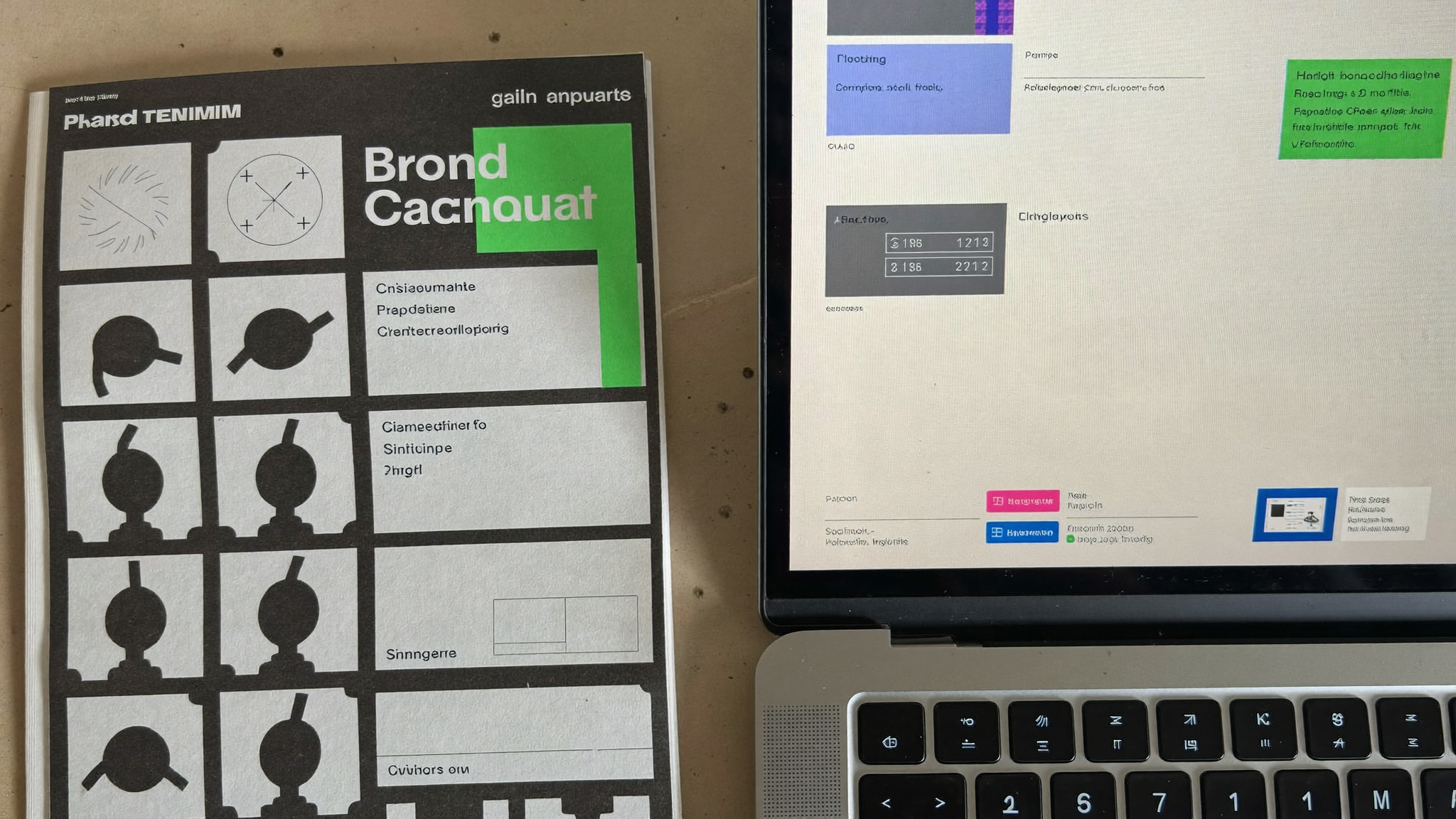

Your style guide is a PDF. Plenty of pages, neatly set, last version from seven months ago. It sits in the Drive, hangs off three old emails and exists in at least two versions that differ in logo size. As long as nothing about the brand changes, that works fine. The moment you adjust a colour, the distribution ritual starts all over again.
The question is rarely "PDF or website" in principle. The question is: at what point does the PDF cost you more time than it saves? This piece puts both formats side by side — fairly, with a comparison table, concrete thresholds and the mistakes that happen most often during the switch.
What a PDF style guide does well
A PDF is a finished document. It looks the same everywhere, can be printed, opened offline and passed on in any presentation. Whoever sets it once has full control over every line, every break, every image. For a style guide meant to represent the brand, that is genuine value.
A PDF also needs no infrastructure. No account, no login, no running costs beyond the one-off design work. You hand it over, and the recipient has everything in a single file. For many small brands with a stable CI, that is enough for years.
The drawback sits in the same quality: a PDF is a snapshot. As soon as something changes, every distributed copy is out of date — and you have no idea who holds which version.
What a digital brand guide does differently
A digital brand guide is a website at a fixed address. You change something in one place, and everyone sees the new version — without anyone having to resend a file. The link stays the same, the content is always current.
Then there is downloading at the source: logos, fonts and images sit right next to their rules. Whoever is looking for the right colour also finds the matching file straight away. External partners need no access to the Drive folder, just the address.
The price is a different one: a digital guide needs upkeep and a place to run. It is not a document you file away once, but a system you operate. That is exactly why it only pays off above a certain size and rate of change.
PDF and digital guide side by side
| Criterion | PDF style guide | Digital brand guide |
|---|---|---|
| Updating | Reset, export, redistribute | Change once, visible to all instantly |
| Access for external partners | Send file, copies uncontrolled | Share link, access managed by roles |
| Asset download | Separately from folder or attachment | Directly at the relevant module |
| Versioning | Manual, via file names | Separate draft and live version |
| Costs | One-off design work, little after | Ongoing, monthly |
| Setup effort | Low, once the document exists | Higher: build, fill, publish |
The table shows no "better" and "worse". It shows that both formats have their strength in different places: the PDF is strong where a fixed, printed document is needed. The digital guide is strong where something changes and many people need access.
When a PDF remains the better choice
Switching is not an end in itself. In these situations a PDF stays the more sensible choice:
- The guide accompanies a one-off handover. For a pitch, a tender or a contract appendix you need a closed document with a fixed state — not a page that could change tomorrow.
- The brand is stable and small. If nothing about colours, logo and fonts has changed in two years and only a handful of people work with it, running a website does not justify the effort.
- The guide must exist in print. For an onboarding booklet, a branch folder or an artwork supplement, the set PDF is ready to use straight away — no detour via screen and export.
A practical middle path: run the digital guide as the single source of truth and generate a PDF from it when needed. That way you have both, without maintaining two versions by hand.
When the switch pays off
Instead of vague gut feelings, a few thresholds help. If two or more of these apply to you, the PDF costs you more than it brings:
- External service providers: As soon as more than three to five agencies, printers or freelancers work with your CI regularly, distributing and keeping files current becomes a permanent chore.
- Rate of change: If you adjust something more often than once a quarter — a colour, a new template, an additional logo — every distributed PDF copy ages faster than you can replace it.
- Team size: From around ten people actively accessing the guide, it becomes impossible to track who is using which version. A fixed address solves the problem at the root.
- Locations or brands: As soon as several branches, national entities or sub-brands need the same rules, central access is worth more than any neatly set page.
The numbers are guide values, not laws. The common denominator: the more people access it and the more often something changes, the more expensive the static document becomes — not in euros, but in queries and errors.
Common mistakes during migration
The switch rarely fails on the technology, usually on the preparation. These mistakes come up most often:
- Copying everything one to one. A PDF is conceived in pages, a digital guide in modules. Rebuilding the layout page by page throws away the advantage. Better: structure by topic — colours, typography, logo, imagery, downloads.
- Bringing outdated assets along. The move is a good moment to tidy up. If you carry over the five logo versions from the old folder unchecked, you have only relocated the chaos.
- Not setting roles. If everyone can edit everything, you get the same mess as in the Drive. Clarify beforehand who maintains, who only reads and who gets access from outside.
- Mixing draft and live version. Changes should only become visible after a deliberate release. Working live on the open guide shows external partners half-finished states.
- Forgetting the old link. After the move it must be clear that the PDF no longer applies. Otherwise both versions keep circulating — the worst of all outcomes.
Clarify these points before you start, and the move becomes a tidy-up day rather than a building site.
Compare formats instead of guessing
Build a small guide in an open demo and see how modules, downloads and a fixed address feel — no account, no commitment.
Questions & answers.
No. A PDF is the right choice for closed handovers, printed folders and stable, small brands. It only becomes a problem when many people need access and content changes often.
When at least two of these apply: more than three to five external service providers, changes more often than once a quarter, more than around ten active users, or several locations and brands.
Yes. A practical route is to run the digital guide as the single source of truth and export a PDF from it when needed. That way you maintain only one version.
Rebuilding the PDF page by page instead of restructuring by topic and module. The second most common: carrying over outdated assets unchecked.
Unlike the one-off set PDF, ongoing monthly costs apply. The honest comparison is not the price, but the time you spend today distributing and correcting.
See it for yourself.